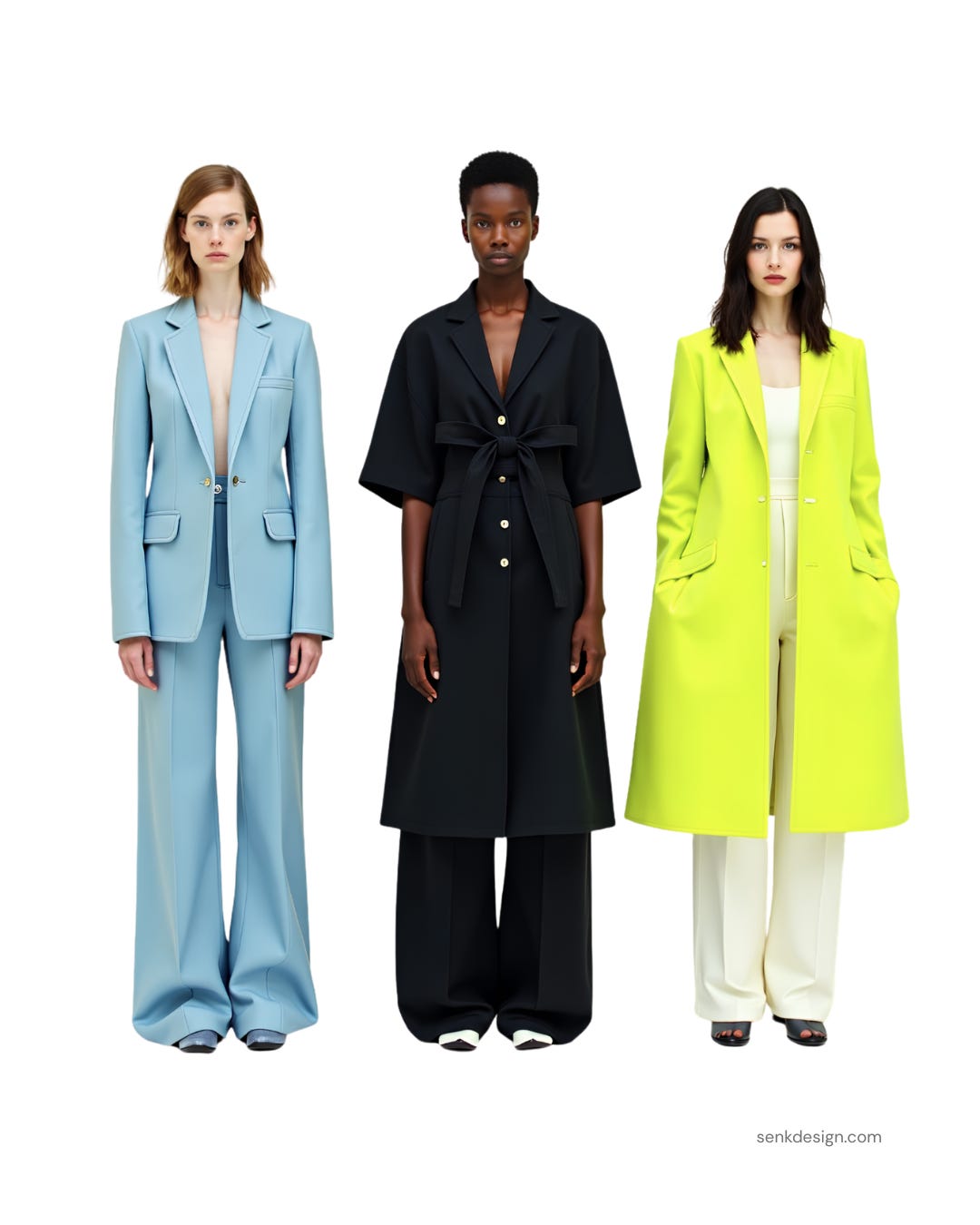
I did not come through the standard industry route. I studied fashion design, then taught myself 3D and CLO. That means I came to this work without the assumption that physical sampling is just how it has to be.
The traditional process involves a lot of guessing: samples, revisions, real fabric and time, and often the same problems repeating across rounds.
Working in 3D changes one thing immediately: you see the effect of your decisions as you make them. If the pattern is ill-fitting, too long, or the zipper does not work in that position, you see it on screen. No need to draft a pattern, cut a toile, and sew it to find out.
Everything we do is digital and remote. A client can come with a rough sketch, measurements, a photo, or just an idea. We draft a sample in CLO and you can see a virtual version of your design. Any changes happen at this stage, before anything is finalised. Once the design is signed off, you receive patterns or final design files. By the time you go to physical sampling, 9 out of 10 issues are already resolved.
Here is what that looks like in practice. A client came to us with a reference image, some fabric direction, and measurements. She was building a pattern collection to sell under her own brand, working remotely, based in the US. We worked through the design digitally, adjusting fit, construction details, and proportion before anything was finalised. When she tested the physical sample, it came back exactly as she wanted. She came back for a second project. Then a third. That is not coincidence. It is what happens when the work is resolved before the physical stage begins.
Most clients do not care how it works. They care about the result. Fewer rounds to get to finished designs. Less back and forth. I genuinely do not enjoy working more than necessary, and neither does anyone else. Efficiency is not a selling point. It is just how good work should run.
If you are building a collection or need digital support for an upcoming project: senkdesign.com